

Over-Classification Is Undermining the Space Force's Strategy
America's space secrets aren't safe. They're just hidden from Americans.

The next time General Stephen Whiting sits before a Senate committee and describes the threats facing U.S. space systems — Russian anti-satellite weapons, Chinese directed-energy programs, bombs, and missiles, and bears (oh my) — he will do it in a nearly empty, wood-paneled room.
The cameras will roll. The transcript will post. And almost none of it will be usable.
Not because Whiting won’t tell them. Because the classification system won’t let him.
Most of what Whiting actually knows about the threat to U.S. space systems, and about America’s ability to fight through it, lives behind Special Access Program compartments and NOFORN stamps that even senior allied commanders cannot read. The public posture statement he delivers — carefully worded and strategically vague — is a shadow of the operational picture.
It’s a weather report that can’t tell you whether it’s going to rain. Welcome to Colorado.
This has been a known problem, but now the cost has changed. The United States is asking the public to support doubling the Space Force, fielding entirely new space warfighting architectures, and treating space as a decisive domain of modern conflict — all while maintaining a secrecy regime designed for a Cold War when the only people who needed to know were already inside the fence. That tradeoff no longer holds. Over-classification is now a strategy problem.
The invisible architecture running very visible wars
Start with what has happened in the last two years and try to explain the space piece out loud. In the spring of 2025, Iran launched more than 500 ballistic missiles at Israel in one of the largest state-on-state ballistic missile attacks in recorded history. U.S. forces, the joint force, and coalition partners tracked those salvos, cued missile defenses, and provided battle management support — largely from space. When Whiting testified before the Senate Armed Services Committee on March 26, U.S. aircraft were actively striking Iranian military infrastructure under Operation EPIC FURY. Space systems were, again, essential to that campaign. Before that, MIDNIGHT HAMMER and ABSOLUTE RESOLVE. Before that, Houthi ballistic missile defense in the Red Sea.
Every major kinetic event of the past two years has run on space-enabled infrastructure.
What you can read about in the public record represents only a fraction of the actual capability. The rest is classified. Not because it’s necessarily sensitive enough to justify the restriction, but because that’s how the system defaults. Classify first. Review never.
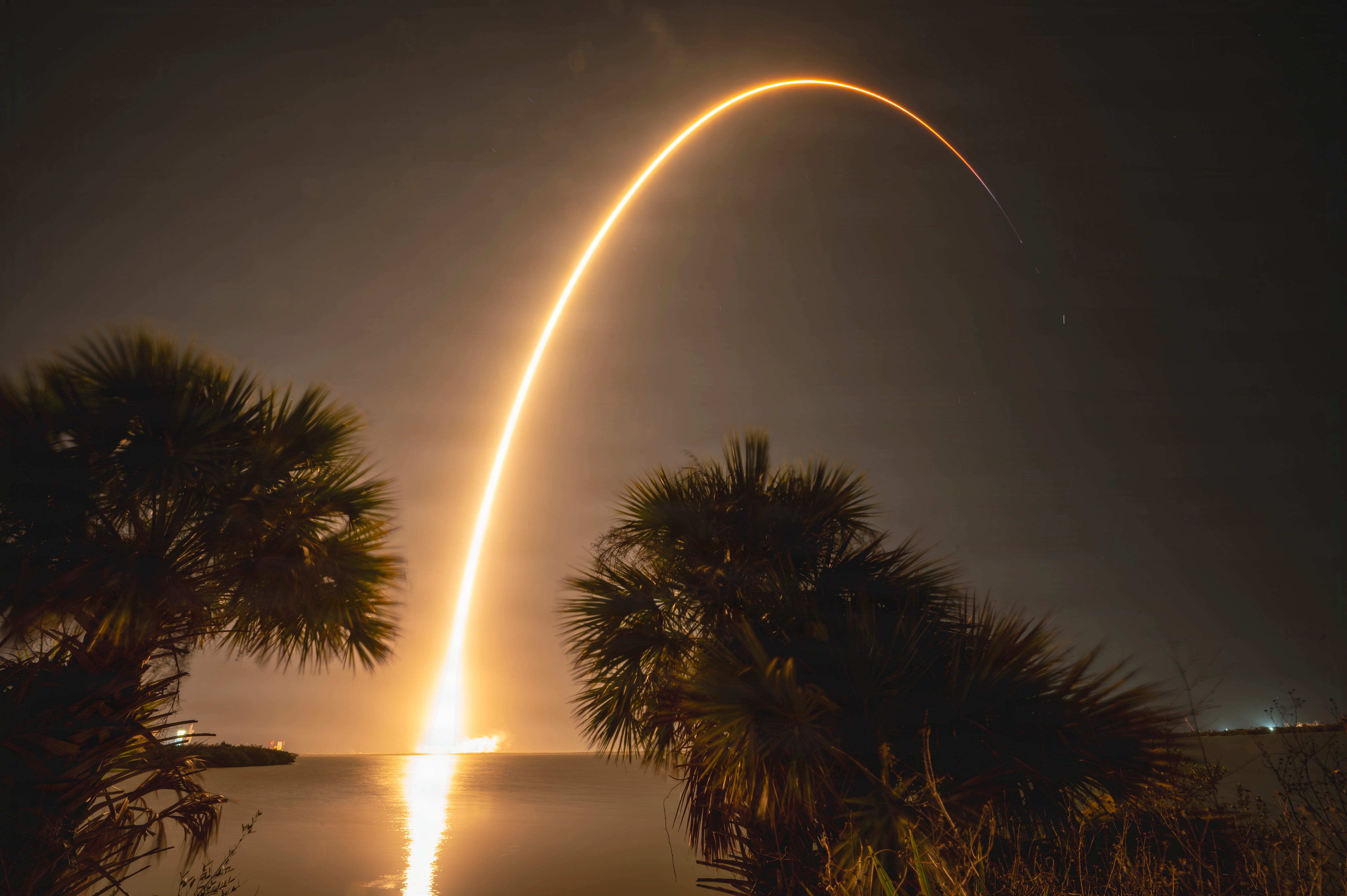
The result is a communications gap that has no parallel in other warfighting domains. When the Army builds a new tank, it tells you the tank exists. When the Air Force tests a new fighter, it holds a rollout ceremony. When the Navy commissions a new carrier strike group, there’s a speech by a senator. When the Space Force fields a new orbital capability — there is sometimes a launch webcast with the upper stage blacked out, followed by official silence, followed (eventually) by a FedSat tracking entry that anyone with a laptop can read.
The secret is often not a secret at all, but rather a performance of secrecy that serves institutional habit more than genuine protection.
Gen. John Hyten, former Vice Chairman of the Joint Chiefs, called the state of space classification “unbelievably ridiculous” and warned that “you can’t deter people if everything you have is in the black.” Gen. Jay Raymond, the first Space Force Chief of Space Operations, made declassification a personal priority from the day the service launched, arguing that the public and allied partners had to understand what space systems do if they were going to support protecting them.
Neither of them managed to solve it.
In January 2024, Deputy Secretary Kathleen Hicks signed a memo that “completely rewrote” DoD’s classification policy for space programs — the first such rewrite in nearly two decades. It set minimum classification baselines, discouraged reflexive Special Access Program designations, and created pathways for information to flow more freely to allies, commercial partners, and the joint force.
The intent was real and the need was urgent.
However, as of the most recent reporting, not a single major space weapon system has completed the process of moving off its old classification tier, yet.
This is the gap at the center of the Space Force’s strategic communication problem. Whiting can tell Congress that space is contested, that the threat is real and growing, that the United States needs more Guardians and more capability and more funding. He can say it in an open hearing and say it more specifically in the closed session that follows. But the public — the voters, the taxpayers, the allied publics whose governments need to make parallel investments — gets the sanitized version, carefully stripped of the operational specificity that would make it land.
When secrecy becomes a self-inflicted wound
A 2023 analysis examining over-classification across U.S. national security programs found evidence of military units purchasing commercial satellite imagery — at cost, using discretionary funds — because the government’s own imagery was classified at a level that prevented it from being shared with the coalition partners they were operating alongside.
Think about that for a moment.
The United States operates what are arguably the most sophisticated space-based intelligence collection platforms ever built. And troops in the field were buying Planet Labs images so they could legally show them to an allied officer standing next to them.
The same analysis documented black space programs being duplicated inside the Pentagon because the classification walls between them were high enough that program managers in the same program — didn’t know one another existed.
Billions of dollars. Same capability.
It was built twice because the secrecy regime that was supposed to protect the investment was instead preventing the left hand from knowing what the right hand was building.
And then there is the absurdity that is most visible to the public — Space Force leaders at the highest levels, constrained from publicly acknowledging the existence of specific satellites and programs that are routinely and accurately covered by open-source analysts.
The official record is less informative than a tweet from an amateur satellite tracker in the Netherlands.
And when the official record is less credible than open-source reporting, the public learns to distrust official statements not because officials are lying but because they are visibly, demonstrably, not allowed to tell the truth in full. That erodes the credibility of deterrence messaging, the credibility of threat assessments — and the credibility of the budget arguments that space leaders like Whiting are now making every spring.
Catching headlines, but not attention
Last week, headlines lit up again about Russian plans for a space-based nuclear anti-satellite weapon. The coverage ranged from alarming to apocalyptic.
What the public got was a fractured picture assembled from anonymous briefings, leaked intelligence assessments, hedged official statements, and — critically — very little authoritative explanation of what such a weapon would actually do. Or what it couldn’t do. Or what the United States was doing about it.
What Whiting’s own testimony offered (in the unclassified record) was a single sentence. Russia’s “reported pursuit of an on-orbit nuclear anti-satellite weapon” constitutes among the most serious threats to the space domain.
No context. No proportionality. No “here’s what happens if they use it and here’s why we’ve built against that.” The classified session that followed was presumably more complete, but the public got a sentence and a week of panic.
This is the communications failure the classification regime produces at scale. Genuine threats get reduced to fragments. Fragments get filled in by worst-case speculation. Worst-case speculation either generates paralysis or, worse, numbness. And then the public hears “space weapons” so many times without any cognitive framework — that it stops processing the information as actionable.
The irony is that better public communication about the Russian anti-satellite threat, such as explaining what nuclear detonation in low Earth orbit would actually do, who it would hurt including Russia itself, why it’s a deterrable act, and how U.S. architecture is being designed to survive and fight through it, would serve deterrence — signaling to Moscow that we’ve prepared and readied for it.
Instead, the classification system defaults to silence, and silence reads as either ignorance or fear.
The double bind of asking for more
Right now, the Space Force is making an explicit, public case to double in size. The service’s vice chief has said publicly that the force likely needs twice as many Guardians to execute its mission. Meanwhile, the top enlisted leader told senators this year that current end strength “isn’t enough” to “effectively fulfill our national mandate.” The budget request for FY27 is asking for billions more in capability, infrastructure, and personnel. Every dollar of that request requires a justification. Every justification requires a threat picture. And the most compelling parts of the threat picture are classified.
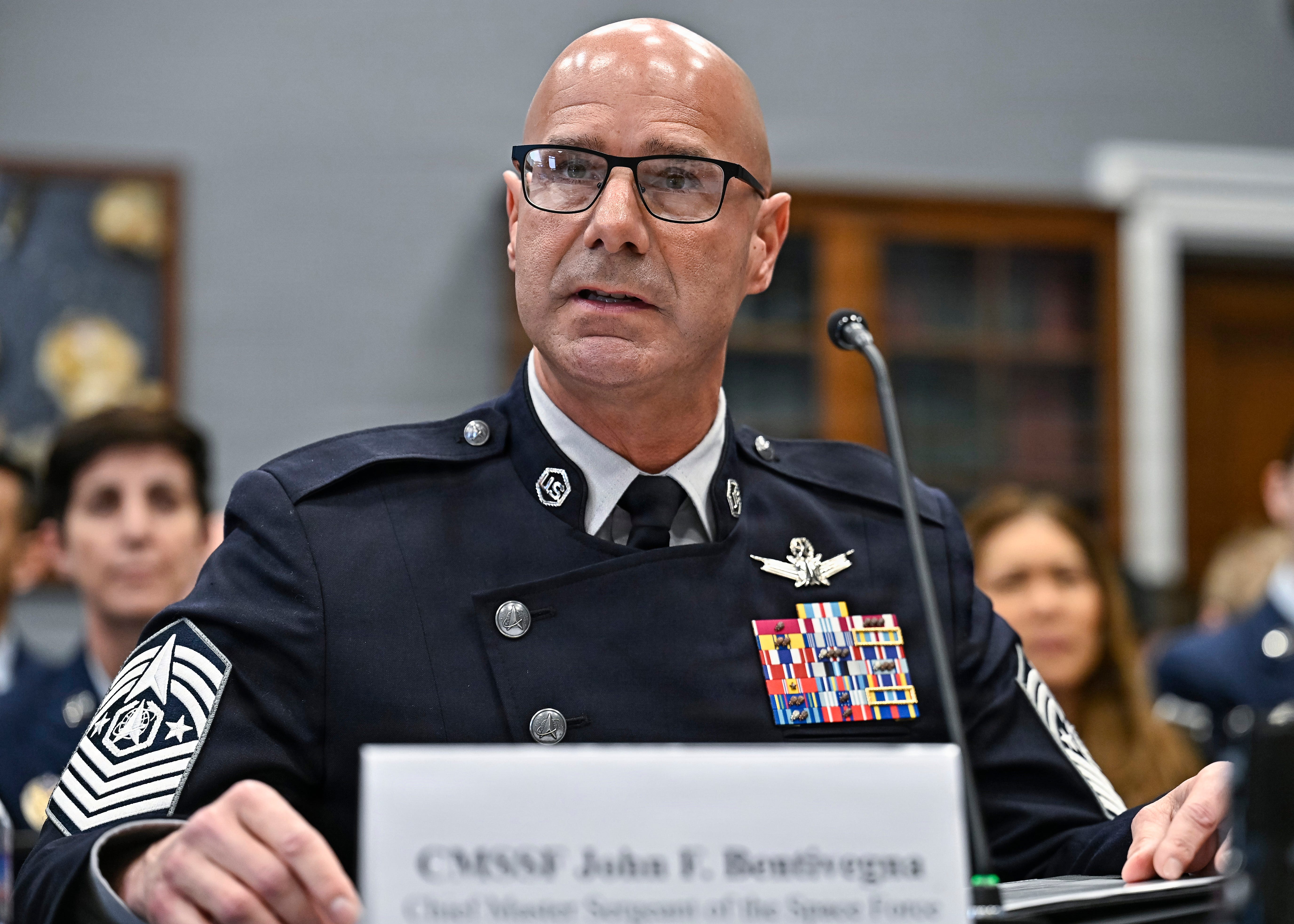
The pitch to Congress and the public is structurally incomplete. Leaders are asking for resources to fight a war they can’t fully describe, for capabilities designed to counter threats they can’t fully name, in a domain most Americans still associate with astronauts and Armageddon.
This isn’t unique to the Space Force, but it is uniquely acute in space because the domain is inherently invisible. The threats are novel enough that casual public knowledge doesn’t fill in the gaps, while the consequences of inadequate investment are catastrophic (think GPS going dark for two weeks).
Simply stated, the public genuinely cannot assess risk without better information.
What Whiting needs is not just a bigger budget, but also a classification framework that allows him to make the case for that budget with the same specificity and credibility in an open hearing that he uses in a closed one. Right now, those are two completely different conversations. And only one of them shapes public will (or even the will of the lobbyists and constituents not in attendance at every classified briefing).
What could “better” look like
None of this is an argument for open-sourcing American spacepower. Some things must remain secret. The question is whether the current regime is calibrated to protect genuine secrets or to protect the entire domain from scrutiny by default.
Reformers inside and outside government have generally decided on a list of things that should change.
First, system-level existence and general mission scope should be unclassified unless there is a specific, articulated reason for secrecy. The satellite exists. It is in orbit. It does space domain awareness or missile warning or communications. That is not a secret. Treating it as one wastes classification resources and destroys public trust simultaneously.
Second, threat taxonomies — the categories of threat, the types of weapons adversaries are developing, the general effects they could produce — should be available to the public, to allies, and to the commercial sector. This is what deterrence messaging requires. You cannot deter a threat you are not allowed to describe.
Third, classification should expire on a default timeline unless actively renewed, with independent authority to review and downgrade. The current system allows programs to remain classified indefinitely through bureaucratic inertia. Most secrets in space are secrets because no one ever got around to deciding they shouldn’t be.
And fourth, commanders should be explicitly resourced and directed to develop public-facing threat communication as a core deterrence function, not as a secondary public affairs mission. Whiting is one of the best communicators in the military at translating complex space concepts into operational language. The classification system is currently preventing him from doing his most important strategic communication work.
Let’s work on this strategic messaging, friends
The Space Force was built on a recognition that space had changed — that it was no longer a sanctuary, no longer a strategic backwater, no longer a support function for real warfighting. It was a contested, congested, competitive domain where the United States needed dedicated forces, dedicated doctrine, and most importantly — dedicated dollars.
That argument succeeded. The service exists. The budget is growing. The recruiting pipelines are filling.
What hasn’t changed is the secrecy regime that treats the most consequential and publicly relevant parts of space strategy as information too dangerous to share with the people being asked to fund, support, and ultimately defend it. The Cold War logic that built that regime was not wrong for its time — but simply not designed for this century. The American public is being asked to invest in a doubling of a military branch whose core mission most of them cannot name.
You cannot build public will for a war you refuse to explain. You cannot deter adversaries with capabilities you are not allowed to acknowledge. And you cannot win in a domain that remains, by institutional default, invisible.
Not to adversaries, who have their own sensors and analysts tracking everything the United States puts in orbit, but to the citizens and lawmakers whose understanding and support are the prerequisite for every satellite, every Guardian, and every dollar that follows.
Strategy requires audiences.
Deterrence requires witnesses.
The classification system requires…reform.
Brilliantly described. Painful reality.